Announcements/Job Postings
- Welcome to the 7th official adhesion GPCR consortium newsletter! We welcome suggestions, feedback, and announcements from the community.
- Please join the AGC on slack, a cloud-based communication platform that will enable us to collaborate and communicate asynchronously. This space is dedicated to the Adhesion GPCR Consortium, providing an efficient way to share updates, exchange ideas, and coordinate efforts. Feel free to contribute to discussions in existing channels or add a new one to discuss something else. Contact Nicole Perry-Hauser for assistance or questions.
- Interested in evaluating IPI antibodies targeting AGPCRs? Use this form to register as an antibody evaluator. The IPI slides are available on Slack, or contact Nathan if you would prefer to be emailed a copy. Institute of Protein Innovation (IPI) offers the development of antibodies/nanobodies against surface proteins free of charge for academic labs in exchange for information on how the antibodies perform in different immuno-based methods. IPI’s Mike Walden and Rob Meijers gave a brief presentation to the AGC on February 3, 2025, and discussed how IPI could assist the AGC with the development of antibodies.
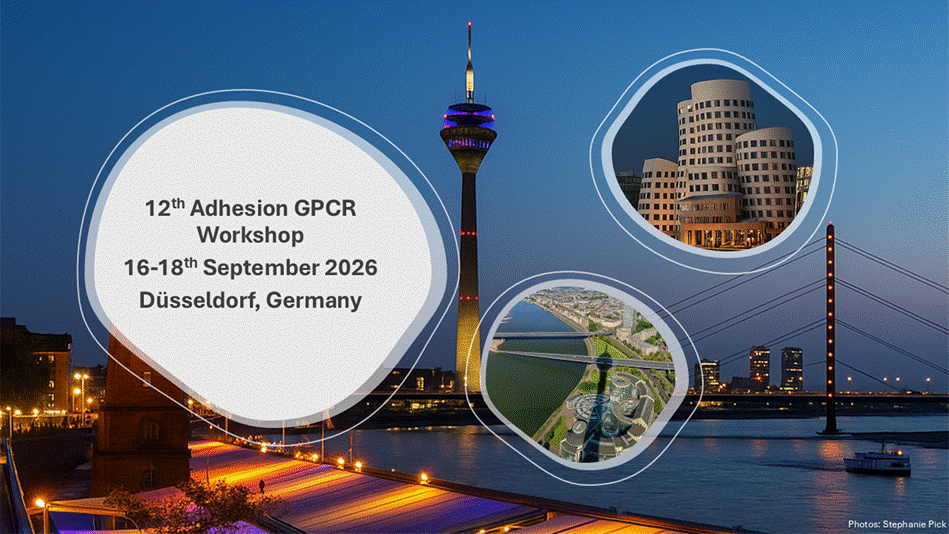
- SAVE THE DATE: The 12th Adhesion GPCR Workshop will be held on September 16-18th 2026 and we are looking forward to welcoming you all to Düsseldorf, Germany. More information will follow when registration opens in mid-January 2026.
Best,
Simone Prömel
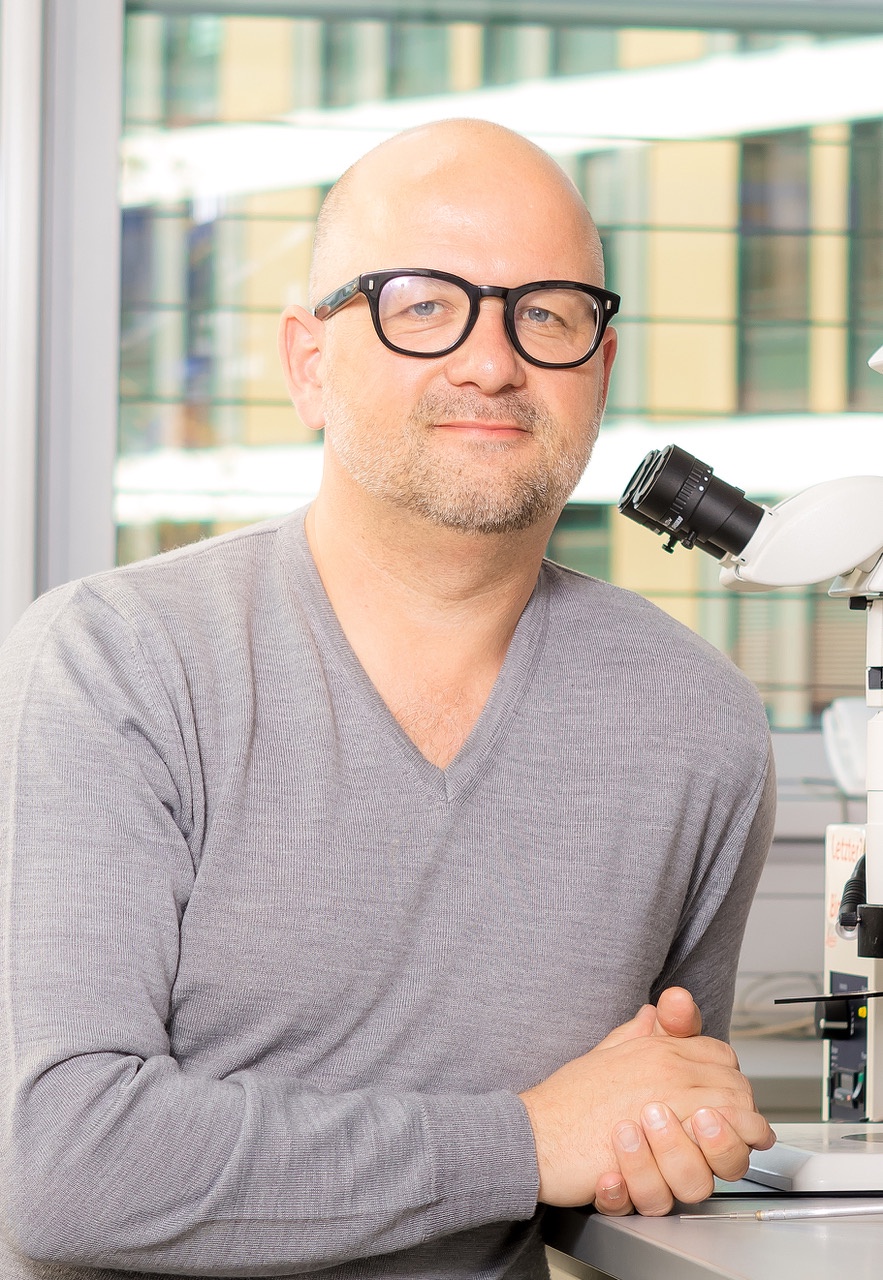
Member Profile: Tobi Langenhan, Professor, Leipzig University
Give us a quick introduction about how you came to science.
T.L.: In my first academic life I studied medicine in Germany. Due to my doctoral research project in anatomy, I became a fiend of neuroscience, so I decided to apply for international combined master-PhD programs to get a solid education in neurobiology. I got accepted into Oxford, where I stayed for five years right after completing medical school.
How did you become involved in adhesion GPCR research?
T.L.: Serendipity. My doctoral supervisor, Andreas Russ, was a specialist in gene targeting in mice, which he had learned in the lab of Martin Evans. During this time, Andreas founded a spin-off company that used this technology to generate knockout/knockin mice of every 7TM receptor in the mouse genome they could lay their hands on. A group of their transgenic strains turned out to be shelf warmers: the ones in which adhesion GPCRs were targeted. So he took those with him when he opened his lab at Oxford. Convinced that the slowness and costs of mouse experiments needed backing by another faster and less complex model organisms, he decided to establish a C. elegans program in his lab. I chose to work on such a project for my Master’s thesis and got the hang of the beauty of genetic analyses combined with in vivo imaging and physiology.
So I returned for my doctoral studies and got allotted a mutant worm strain lacking a certain lat-1 gene. I was simply given the task to clarify what’s wrong with it. lat-1 is an evolutionarily ancient latrophilin/ADGRL homolog. I set out to test whether the strong lethality of the knockout allele was due to its proposed involvement in synaptic transmission, which back then was the main trajectory of thinking about latrophilins. Four years later, we published our first account revealing that lat-1 acts much earlier than the birth of the first neuron in the animal — as a key factor that conveys tissue polarity information to the embryo.
Where did your love for worms, flies and developmental biology come from?
T.L.: Several reasons. Indeed, worms & flies may seem like awkward model choices for a medical scientist at first glance. However, many areas in the biosciences would not have emerged without invertebrates spearheading those ventures. Much of our knowledge on signals that are transduced by transmembrane sensors such as Frizzled, Hedgehog, Notch, EGF or Toll-like receptors is owed to discoveries first made in invertebrates (in fact, four out of these five receptor systems were named after Drosophila mutants in which they were first characterized). Doubting that this type of science offers insights into human physiology and pathology, as voiced by the ever-louder calls for translational research, is moot. In addition, the technology suite of invertebrate research is superb and has been allowing for excellent experimental control of whatever research question I tried to answer so far.
As far as developmental biology is concerned: in the end, everything is development: growing, aging, learning, behavior, disease.
Some have said you prefer English food and beer to German. True or False?
T.L.: I love English pubs. As for the food — let’s just say I usually end up ordering Indian.
What do you think is the next great hurdle in the aGPCR field? What challenges will researchers overcome in the next 10 years?
T.L.: The field has by now shown that adhesion GPCRs can work in more than one way – activating cell-autonomous responses with and without receptor dissociation, act non-cell-autonomously on yet unknown targets and tasks, function as receptor complexes in concert with other transmembrane proteins. I think our biggest challenge is to meld the many different exciting discoveries made by our remarkable community into coherent working models.
We will also require new experimental approaches to monitor receptor activation by natural force stimuli transmitted through ligand engagement, signal transduction and intracellular consequences to get a better temporal view of how adhesion GPCRs signals are generated.
Finally, we need a deeper understanding of where and how long each individual adhesion GPCR operates within its home cell(s). Very little is known about the subcellular location of most of the receptors, how many of them are assembled at a membrane patch to surveil the cell’s surrounding for their activating stimuli, and how long a receptor lives before it is replaced.
New Insights
- Member Nicole Perry-Hauser et al. illustrate the need for full-exposure of the tethered-agonist for optimal G protein activation by ADGRL3 and further show that the NTF of ADGRL3 can be spontaneously shed. PMID: 39798870.
- Members Ines Liebscher, Jing-Peng Sun, and Torsten Schöneberg present the cryo-EM structure of ADGRD1 in complex with androgen 5α-DHT, revealing the structural basis for androgen recognition by ADGRD1. PMID: 39884271.
- Members Nicole Scholz, Tobias Langenhan, and Torsten Schöneberg report the existence of unconventional 1TM-containing ADGRL/Cirl proteins in Drosophila as a result of intron retention allow non-canonical Gαo-dependent signaling. PMID: 39705141.
- Members Mette Rosenkilde, Signe Mathiasen, Torsten Schöneberg, and Greg Tall characterize the G protein-mediated signaling profile for ADGRA3 using human cell line-based signaling assays. PMID: 40127866.
- The cryo-EM structure of the C1ql3-ADGRB3 complex. PMID: 40316654.
- A scheme for generic residue numbering of GAIN domains based on structural alignments of modeled GAIN domains has been introduced. PMID: 39747076.
- Member Uwe Wolfrum’s lab shows that ADGRV1 is localized to the base of primary cilia, where it interacts with TRiC/CCT chaperonins and the BBS chaperonin-like proteins. PMID: 40103630.
- Member Demet Araç’s lab reports the cryo-EM structure of the CELSR1 ECR, revealing a compact ECR domain arrangement that regulates receptor function. PMID: 40295529.