Announcements/Job Postings
- Welcome to the 6th official adhesion GPCR consortium newsletter! We welcome suggestions, feedback, and announcements from the community.
- The 2026 aGPCR workshop will be hosted by Simone Prömel in Dusseldorf, Germany!

- There will be an aGPCR session entitled “From Structure to Function: Emerging Roles for Adhesion Receptors in Physiology” at the American Physiology Summit taking place in April 2025 in Baltimore! Please see this website for registration. Speakers include Demet Araç, Nicole Scholz and Greg Tall.
Wrap-up from the 2024 aGPCR workshop in Mexico City:
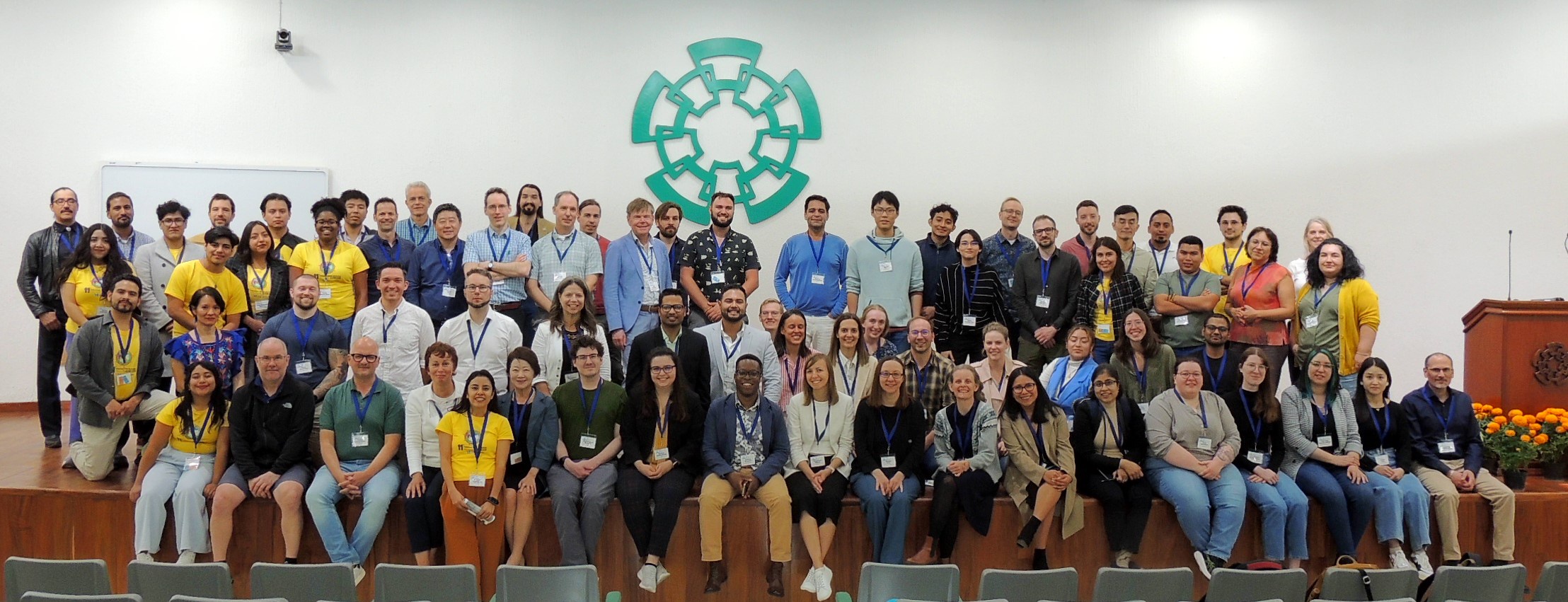
- Over 60 attendees had a great time in Mexico City, giving talks, presenting posters, and networking!
- If you have pictures you would like to share, please send them along to adhesiongpcr@gmail.com
- The aGEM award winners were Andrew Dates/Simeon Mihaylov (tie, Postdoctoral) and Florian Seufert (Predoctoral)!

- New members were elected to the aGPCR Consortium Board, including Nicole Perry-Hauser (University of Glasgow), Beatriz Blanco-Redondo (University of Leipzig), and Signe Mathiasen (University of Copenhagen).
- The chairs of the aGPCR Consortium Board were elected and are Antony Boucard (Cinvestav Mexico), Nicole Scholz (University of Leipzig), Nathan Zaidman (University of New Mexico), and Demet Araç (University of Chicago).
- Thank you to departing members of the board: Xianhua Piao (University of California San Francisco), Mette Rosenkilde (University of Copenhagen), and Randy Hall (Emory University). Thank you for your contributions to the community and your service to the consortium!
New Insights
- Member Demet Araç’s lab uses cryo-EM and single-molecule FRET to map the conformational changes between the extracellular and transmembrane domains of ADGRL3. PMID: 39627215.
- Member Erwin G. van Meir’s lab presents two novel short isoforms of ADGRB1 from an alternative promoter in intron 17, which closely resemble truncated BAI1 (CTF) generated through GPS processing. PMID: 38941066.
- Members Douglas Tiley’s and Xianhhua Piao’s lab show that ADGRG1 plays an important role in the early adaptation to chronic cardiac stress and cardiomyocyte-specific loss of it promotes pressure overload-induced heart failure in mice. PMID: 39264336.
- Member Mette Rosenkilde’s lab show that ADGRA3 regulates distal vaginal tissue remodeling during vaginal canalization via altered sex hormone responsiveness and balance in apoptotic regulators. PMID: 38589878.
- Member Simone Prömel’s lab shows that Latrophilin-1 homolog in C. elegans regulates sperm guidance, ovulation, and germ cell apoptosis in a noncell autonomous manner independent of its 7TM CTF. PMID: 39243387.
- Ceramide can cleave the C-terminal intracellular domain of ADGRG2, which can then translocate to the nucleus and mediate critical growth signaling in Ewing sarcoma. PMID: 39024100.
- The amino-terminal domain of the GluK4 Kainate-type glutamate receptor subunit binds to C1ql1, provided by climbing fibers, and associates with ADGRB3 in Purkinje cell dendrites. PMID: 38986610.
- ADGRF5 knock-out mice exhibit albuminuria, impaired kidney function, and defects in glomerular morphology, accompanied by alterations in the expression of genes involved in glomerular basement membrane organization. PMID: 38844335.
- ADGRF5 is activated in leptin-receptor-expressing skeletal cells to form orthopedic peri-implant fibrous tissue, and its inhibition can prevent and reverse peri-implant fibrosis. PMID: 39085645.
- ADGRL2 is a fluid shear-stress mechanosensor upstream of PECAM-1 required for flow-dependent angiogenesis and artery remodeling. PMID: 38886581.
- ADGRG1 protects against ferroptosis-mediated liver injury by decreasing polyunsaturated fatty acid phospholipid abundance via endocytosis and lysosomal degradation of CD36. PMID: 39389061.
- GPR124 regulates CNS forebrain angiogenesis and blood-brain barrier function independent of the intracellular domain in mice. PMID: 38682276.
- ADGRL1 is among the few postsynaptic adhesion molecules present in both excitatory and inhibitory synapses, and by itself, it might not be essential for excitatory synaptic transmission but required for some inhibitory synaptic connections. PMID: 38684366.