Welcome to the 4th official adhesion GPCR consortium newsletter!
We welcome suggestions, feedback, and announcements from the community.
Announcements
Please save the date for the the 2024 aGPCR workshop hosted by Antony Boucard!
This exciting conference will take place from October 23-25th. We’ll see you in Mexico City!
Please see this website for details on the conference as well as the Logo Contest!

Member Profile
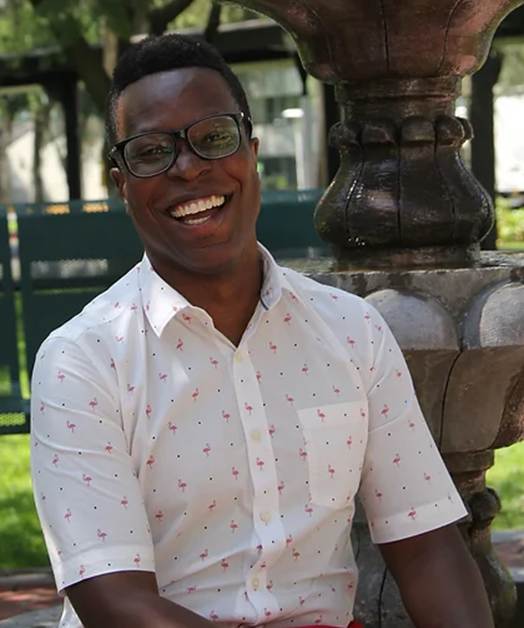
Antony Boucard, Professor, Centro de Investigación y de Estudios Avanzados del IPN (Cinvestav)
How did you become involved in adhesion GPCR research? What is your backstory?
AB: I became aware of the existence of adhesion GPCRs while completing my graduate studies. The family of adhesion GPCRs called the Latrophilins or ADGRLs first captured my attention due to their involvement in neuronal synapses uncovered through the mechanism of action of a paralyzing component from black spider venom. For my postdoctoral training, I joined one of the labs that participated in Latrophilins’ discovery, the lab of Dr. Thomas Südhof, but did not start working on them right away. This was because at that time, the neurexins, another family of adhesion molecules which also happened to be targeted by the same spider toxin as latrophilins, were a more pressing matter. Transitioning to study Latrophilins, I decided to test the interaction of neurexins with Latrophilins. To my surprise and delight, the neurexins happened to be ligands for one isoform of the Latrophilins. Another chapter was being written for me and has been in full redaction since then.
What do you think is the next great hurdle in the aGPCR field? What challenges will researchers overcome in the next 10 years?
AB: One of the big challenges that the field will have to face in the next 10 years is deciphering the physiological relevance of splice-dependent aGPCR diversity. Alternative splicing events account for hundreds if not thousands of potentially divergent isoforms throughout many species. The distribution, functionality and structure of the multiple splice isoforms that adhesion GPCRs possess is currently unknown. This will greatly impact not only the way we understand how aGPCR work but might also provide a guide to how pharmacological approaches will be developed i.e. splice isoform-specific agonist/antagonists compounds.
How did you become involved with the AGC? Who volunteered you to host the next workshop?
AB: I became involved with the AGC through a suggestion from one of my colleagues to join this select group which was getting together talking about my favorite molecules. If I wanted to be part of the narrative, I felt that I had to join the community. And so I did. My first meeting was in Boston. I still remember entering the Hall at Boston´s Children Hospital, going to register and being asked who was my PI. As much as I was shocked that I wasn’t asked if I was a student or a PI, I was more proud to say that I was coming as the founder of my own lab.
I was volunteered to host the AGC Workshop by two Board members Tobias Langenhan and Jörg Hamann. I said yes as soon as they approached me. I in turn recruited Yamina Berchiche founder of DrGPCR.com to join me in this endeavor.
What are you most excited about for the upcoming workshop? If someone is flying in from the other side of the globe, what are three things they must experience in Mexico City?
AB: The next workshop will likely bring together some of the hottest adhesion GPCR research going on right now and set the tone for the upcoming years. The excitement I felt when I first attended back in Boston is the same one I feel now that I am the organizer. Also seeing the expanding diversity among the aGPCR community added to the fact that this will all take place for the first time in a developing country like Mexico, is paramount. There are a lot of firsts in this perspective: the first time in a LATAM country, the first organized by Afro-descendents (Yamina Berchiche my co-organizer has African roots and my origins are Afro-Carribean). This might not be a big deal for many but in this new era of making sure that historically excluded demographics are finally included, this to me represents a building block to reinforce the need of diversity in science. A small step toward leveling the playing field.
When in Mexico City from 23-25 October here is my bucket list of the 3 things that people should absolutely experience:
- The Day of the Dead celebrations: This happens over the weekend during end of October and takes the shape of costume parades in which everybody contributes their own versions of the Catarinas (Folklore Mexican ghost lady) or explore the mysterious world of the Alebrijes. Of course there is the famous parade popularized by the James Bond movie Spectre.
- The food: While in Mexico eat like one. The diversity is humongous. No wonder why the Mexican cuisine has obtained the coveted status of UNESCO´s Intangible Cultural Heritage of Humanity.
- The Teotihuacan pyramids: although it is very touristy it is just a hop away from Mexico City and finds its way on many destinations list for a reason. A reminder of how fragile civilizations can be.
What is your favorite taco? What mariachi song are you most likely to shout along to at 3AM?
AB: Favorite Taco: Taco de suadero (pronounced swa-day-ro), fatty, meat caramelized in it’s own fat, tender and Oh did I say fatty Note that Taco al Pastor is a staple among Mexico City’s delicious tacos. The meat on a rotating spit with its bright red/orange chili-based marinade (spicy but not hot) catches your eye. And then the way it is served with the swiftly chopped charred pineapple for garnish adds to the visuals. A must try!
Mariachi song: I typically do not sing to these since they are dear to Mexican childhood memories, and I feel like an imposter if I do. However, Reggaetón is a highly dynamic genre which attracts many here in Mexico and not to forget salsa music. Don’t be surprised if you find yourself singing Daddy Yankee’s “Gasolina” from the top of your lungs while executing your best perreo or Luis Enrique’s “Yo no sé mañana” while a stranger takes you floating across the dance floor. If this is not the case, go to another party. I know I have.
New Insights
Members Torsten Schöneberg and Ines Liebscher present an interactive browser-based application, Splice-O-Mat, for understanding tissue distribution of alternatively spliced genes. PMID 38421639
Systematic assessment of the tethered agonist-dependent activities of all 33 aGPCRs in a suite of transcriptional reporter, G protein activation and B-arrestin recruitment assays. PMID: 38608683
The activation profile of different G proteins by ADGRL3 is shown using a collection of biosensor constructs. PMID: 38412860
GPR133 is hypomethylated and upregulated in decidual macrophages in recurrent spontaneous miscarriage patients. PMID: 38564758
BAI1 is expressed in the afferent spiral ganglion neurons in the mouse cochlea where it localizes AMPA receptors at the post-synaptic density and plays a crucial role in sound transmission. PMID: 38564333
CD97 expression is upregulated upon orthodontic compression and inhibits osteoclast differentiation, likely by Rap1a/ERK signaling pathway. PMID: 38311610
Member Dimitris Placantonakis’s identifies extended synaptotagmin 1 as an intracellular interaction partner of GPR133 using proximity labeling. PMID: 38758649
Member Simone Prömel’s lab shows that the nematode (C. elegans) homolog of CELSR, FMI-1, modulates the composition of the ECM and nematode body size. PMID: 38378098
Curated by Sumit J. Bandekar with help from Nathan Zaidman and Abhishek K. Singh